


.svg)


The client is an established building society in the financial services sector, serving its members through savings and mortgage products. As part of its digital transformation, it needed a more efficient way to manage cases and support faster decision-making, while cutting the operational costs of its existing systems.
Moxie replaced the legacy system with a centralized case management platform built on OutSystems, adding automated case assignment, real-time queue visibility, and live reporting dashboards. Data intake was streamlined via text and mailbox integration, and the platform connected seamlessly with existing internal portals.
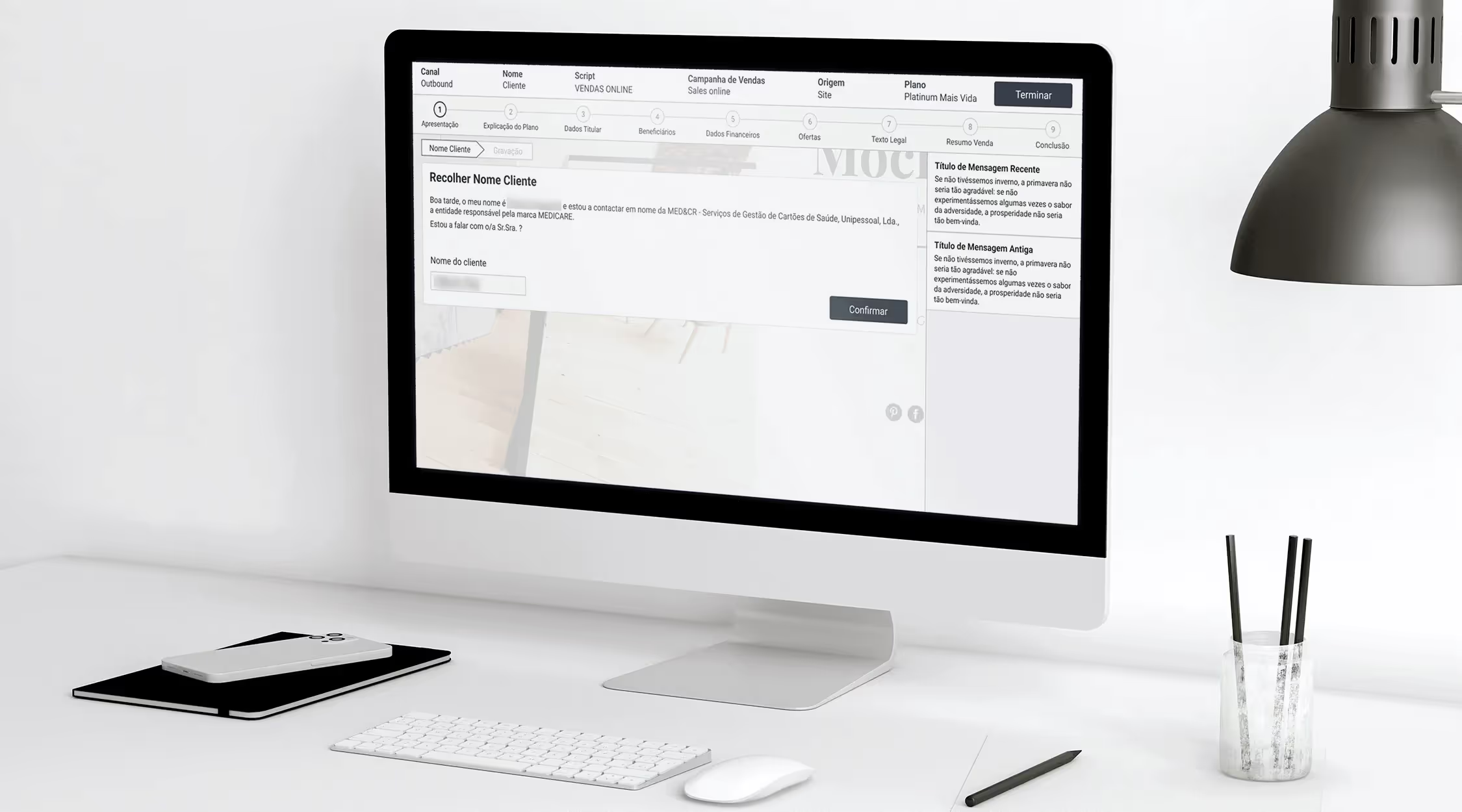
Replace the legacy Case Management application, removing the licensing costs tied to that old system a recurring cost driver that no longer made sense given what's achievable with low-code.
Moxie delivered a centralized case management platform built on OutSystems to replace Principality Building Society's legacy system. At its core, the solution introduced automated case assignment and real-time queue management, giving full visibility into total, available, and deferred cases, priority levels, and SLAs across queues such as General and Enquiries.
To support faster, data-driven decisions, the platform also included a live reporting dashboard tracking case volumes and trends per queue. Data intake was streamlined through text scraping and text file integration, pulling in information from legacy or external sources, while mailbox integration automatically created and assigned cases directly from incoming emails.


By replacing the legacy case management system, the client eliminated the recurring licensing costs tied to its previous solution while gaining a faster, more efficient way to manage cases across its support queues. Automated case assignment and real-time reporting gave teams clearer visibility into workload and priorities, enabling more data-driven decisions and reducing the manual effort previously required to track and route cases. Combined with seamless integration into existing internal portals, the new platform was adopted with minimal disruption, positioning the client with a scalable, low-code foundation it can continue to build on beyond this initial rollout.
.svg)